
Islam is built on strong foundations that guide the beliefs, actions and daily lives of Muslims around the world. These foundations are known as the Five Pillars of Faith in Islam. They are not simply rituals or religious obligations. They are acts of worship that strengthen a Muslim’s relationship with Allah, create discipline, encourage kindness and build a balanced spiritual life.
Every Muslim, regardless of nationality or background, follows these Five Pillars of Faith in Islam as the core of Islamic practice. The Five Pillars of Faith in Islam teach sincerity, patience, charity, devotion and unity. From daily prayers to fasting during Ramadan and performing Hajj in Makkah, these pillars shape Muslims’ identities throughout their lives.
For Muslims in the UK planning their spiritual journey, understanding these pillars becomes even more meaningful before Umrah or Hajj. Many families who search for the best or most affordable umrah package often want to strengthen their Islamic understanding before traveling to the holy cities.
Understanding the Five Pillars of Faith in Islam
The Five Pillars of Faith in Islam are essential acts that every Muslim follows to live in accordance with Islamic teachings. These Five Pillars of Faith in Islam create a complete framework for worship and personal growth. They teach Muslims how to connect with Allah, serve humanity and remain spiritually aware in daily life.
Without these pillars, Islamic practice would feel incomplete. They provide structure, consistency and purpose. Muslims perform these acts not because they are forced, but because they bring peace, discipline and closeness to Allah.
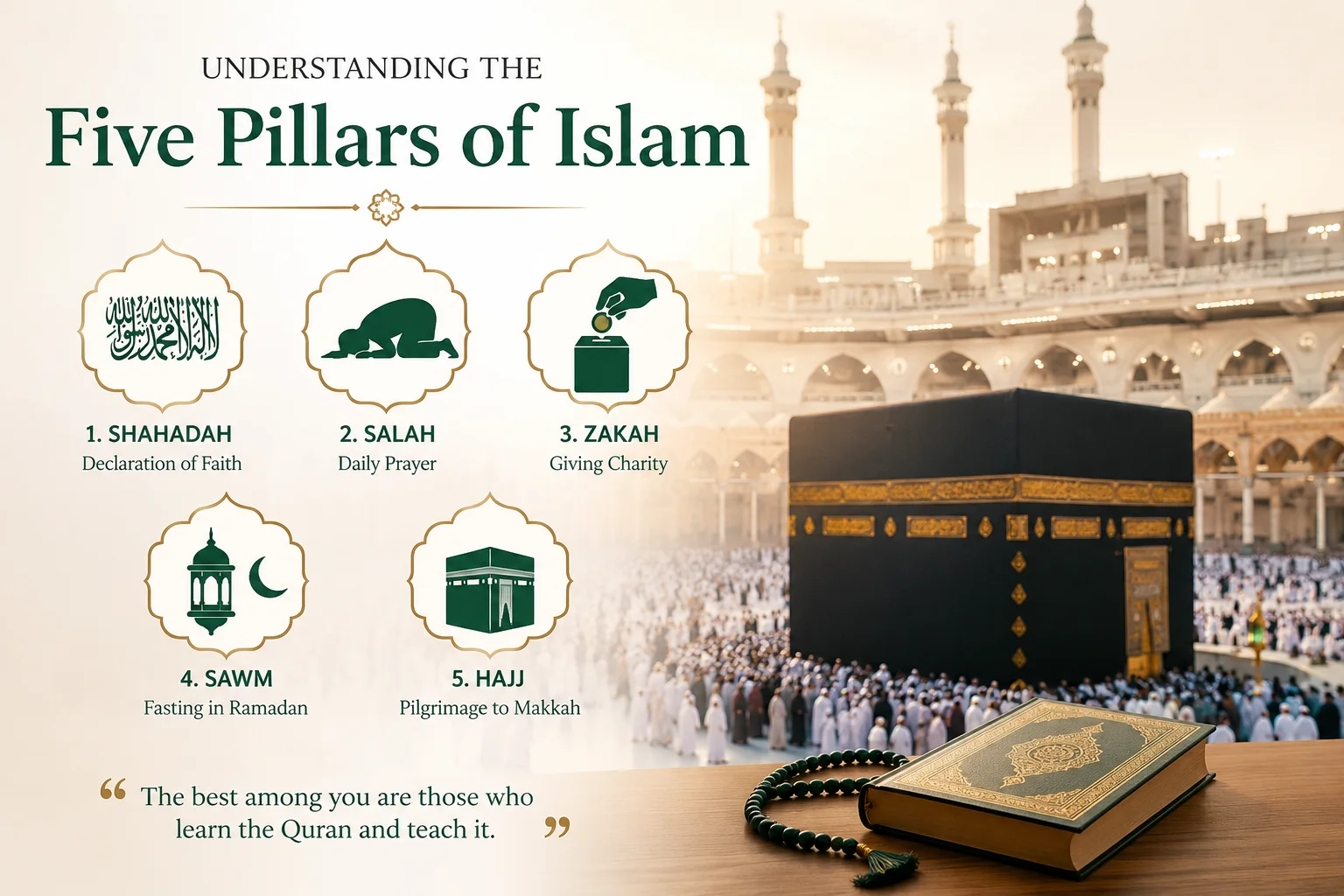
The five pillars are:
- Shahadah – Declaration of Faith
- Salah – Daily Prayer
- Zakah – Charity
- Sawm – Fasting in Ramadan
- Hajj – Pilgrimage to Makkah
Each pillar has a unique role in strengthening faith and building a strong Muslim community.
Five Pillars of Faith in Islam and Their Meaning
1. Shahadah – The Declaration of Faith
Shahadah is the first and most important pillar of Islam. It is the declaration that:
“There is no god but Allah and Muhammad (peace be upon him) is His messenger.”
This statement forms the foundation of Islamic belief. A person becomes Muslim by sincerely accepting and declaring this testimony of faith.
Shahadah reminds Muslims that Allah alone deserves worship. It also teaches them to follow the teachings and example of Prophet Muhammad (peace be upon him). Muslims repeat this declaration in prayers, daily conversations and important moments of life.
This pillar develops sincerity and complete trust in Allah. It encourages Muslims to remain honest, humble and conscious of their faith every day.
2. Salah – Daily Prayer
Salah is the second pillar and one of the most visible parts of Islamic life. Muslims pray five times a day:
- Fajr – before sunrise
- Dhuhr – afternoon
- Asr – late afternoon
- Maghrib – after sunset
- Isha – night prayer
Prayer connects Muslims directly with Allah. It provides moments of reflection, peace and spiritual discipline during a busy day.
The Five Pillars of Faith in Islam teach consistency and Salah is the best example of that consistency. Muslims pause their work, studies and daily activities to remember Allah and seek guidance.
Children usually begin learning prayer from an early age. Parents teach them step by step, helping them memorize short surahs and understand the importance of worship. This gradual learning fosters strong Islamic habits that carry over into adulthood.
For many Muslims preparing for Umrah, improving their prayers becomes an important goal before visiting Makkah. Choosing a trusted Umrah Packages UK travel agency helps pilgrims focus on worship without worrying about the complexities of travel arrangements.
3. Zakah – Giving Charity
Zakah, which stands for financial cleansing, is the third pillar of Islam. Muslims who meet the required savings threshold must give a portion of their wealth to those in need.
Islam holds that wealth is a gift from Allah and is to be used for the good of society. Zakah helps reduce poverty, supports struggling families and encourages compassion.
This pillar teaches Muslims to care for others and avoid selfishness. It reminds believers that helping the poor is not optional kindness but a religious responsibility.
Many Muslims also give additional charity known as Sadaqah. This can include feeding people, supporting mosques, helping travelers, or assisting communities in need.
The beauty of the Five Pillars of Faith in Islam is that they balance both personal worship and social responsibility. A Muslim does not only focus on prayer but also supports humanity through generosity and kindness.
4. Sawm: Ramadan Fasting
Fasting throughout the month of Ramadan is called sawm. Muslims avoid food, drink and sinful behavior from dawn until sunset.
Fasting is more than avoiding meals. It teaches self-control, gratitude, patience and empathy for people who struggle with hunger.
Ramadan is a special time when Muslims increase prayer, Quran recitation and charity. Families gather for Suhoor before dawn and Iftar after sunset. Mosques fill with worshippers seeking closeness to Allah.
The Five Pillars of Faith in Islam help Muslims strengthen their spiritual lives and Ramadan is often considered one of the most spiritually powerful times of the year.
Children usually learn to fast gradually. Parents encourage them with shorter fasts and explain the meaning behind Ramadan in simple ways. Through family traditions, storytelling and mosque activities, children naturally develop a love for Islamic practices.
People who are sick, elderly, traveling, pregnant, or unable to fast are given ease in Islam. They may make up missed fasts later or provide compensation in accordance with Islamic teachings. Islam always considers human ability and circumstances.
5. Hajj – Pilgrimage to Makkah
One of the most significant spiritual experiences a Muslim can have is the Hajj, which is the fifth pillar of Islam. Every Muslim who is financially and physically capable is required to complete the Hajj at least once in their lifetime.
Millions of Muslims gather in Makkah every year during the Islamic month of Dhul Hijjah. Pilgrims wear simple clothing and perform acts of worship that symbolize equality, unity and devotion to Allah.
Hajj teaches humility and reminds Muslims about the Day of Judgment. Rich and poor stand together without status or superiority. Everyone worships Allah as equals.
Many Muslims also perform Umrah throughout the year. Although Umrah is not compulsory like Hajj, it holds great spiritual rewards.
Today, finding the best umrah package helps pilgrims travel comfortably while focusing on worship. Families often search for an affordable umrah package that includes flights, visas, hotels near Haram and guided support.
For first-time travelers in particular, selecting a reputable Umrah Packages UK travel provider can make the entire trip simpler and more tranquil.
Why Hajj Holds Such Great Importance
Hajj is unique because it combines physical worship, financial sacrifice, patience and complete submission to Allah. It follows the legacy of Prophet Ibrahim (AS), Hajar (AS) and Prophet Ismail (AS).
Pilgrims perform Tawaf around the Kaaba, walk between Safa and Marwah, stand at Arafat and complete several sacred rituals that carry deep historical and spiritual meaning.
For many Muslims, Hajj becomes a life-changing experience. It strengthens faith, encourages repentance and creates unforgettable spiritual memories.
That is why Muslims around the world spend years saving money and preparing emotionally for this sacred journey.
Five Pillars of Faith in Islam in Daily Life
The Five Pillars of Faith in Islam influence almost every part of a Muslim’s daily routine. They are not limited to mosques or religious gatherings. Instead, they shape behavior, mindset, relationships and decision-making.
A Muslim begins the day with Fajr prayer, avoids dishonest actions because of faith in Allah, gives charity to support others, fasts with patience during Ramadan and dreams of visiting Makkah for Hajj or Umrah.
These Five Pillars of Faith in Islam create discipline and moral responsibility. They encourage Muslims to:
- Speak truthfully
- Respect parents
- Help neighbors
- Stay patient during hardships
- Avoid harmful actions
- Remain thankful for blessings
Islam teaches balance between worship and daily responsibilities. Muslims are encouraged to work honestly, treat people fairly and maintain strong family ties while fulfilling their religious duties.
This balance is one reason why many people admire the structure and wisdom found within Islamic teachings.
Simple Explanation of the Five Pillars of Faith in Islam for Beginners
Many people wonder how to understand Islam in simple words. The simplest explanation is that the Five Pillars of Faith in Islam are five essential acts every Muslim follows to remain connected to Allah.
- Shahadah teaches belief
- Salah teaches worship and discipline
- Zakah teaches generosity
- Sawm teaches patience and self-control
- Hajj teaches unity and devotion
Together, these pillars help Muslims lead meaningful, balanced lives.
Even children can understand these concepts when explained through stories, family practices and daily routines. Islamic education often starts with simple examples that gradually build a stronger understanding as children grow older.
How Families Teach Islamic Five Pillars of Faith in Islam to Children
Parents play a major role in teaching Islam to children. Most Muslim families introduce the pillars through everyday experiences.
Children hear the call to prayer, watch parents fast during Ramadan, join charity activities and listen to stories about Makkah and the Prophets.
Many parents use:
- Islamic storybooks
- Mosque classes
- Quran learning sessions
- Ramadan activities
- Educational videos
- Family discussions
This practical learning helps children develop a natural love and respect for their religion, rather than feeling pressured.
The Five Pillars of Faith in Islam become easier to understand when children see their parents practicing them sincerely and consistently.
What Happens If Someone Cannot fulfill a Pillar?
Islam is a compassionate and understanding religion. Muslims are expected to fulfill the Five Pillars of Faith in Islam according to their ability.
For example:
- Sick people may pray sitting down
- Travelers may shorten prayers
- Those unable to fast due to illness receive exemptions
- Muslims without financial ability are not required to perform Hajj
- Zakah is only required for those who meet the wealth condition
Allah does not burden people beyond their capacity. I am encouraged by effort, sincerity and intention.
This flexibility shows the wisdom and compassion within Islamic teachings. The goal is not hardship but spiritual growth and connection with Allah.
The Spiritual Benefits of Following the Five Pillars of Faith in Islam
The Five Pillars of Faith in Islam provide countless spiritual and personal benefits.
They help Muslims:
- Build discipline
- Stay spiritually focused
- Develop gratitude
- Strengthen patience
- Increase compassion
- Create unity within communities
- Improve moral behavior
People who consistently practice these pillars often experience greater emotional peace and a sense of purpose in life.
In today’s fast-moving world, these acts of worship help Muslims remain connected to faith and values.
Strengthen Your Faith with a Meaningful Umrah Experience
The Five Pillars of Faith in Islam are the foundation of Muslim life. They guide worship, strengthen character and create a deep connection with Allah. Through faith, prayer, charity, fasting and pilgrimage, Muslims develop discipline, compassion, patience and spiritual awareness.
These Five Pillars of Faith in Islam are not only acts of worship but a complete way of life that shapes daily habits, family values and community relationships. They provide direction, balance and peace for Muslims worldwide.
For those planning to strengthen their faith through Umrah or Hajj, choosing a trusted travel partner is equally important. At Umrah Packages UK, travelers can find reliable guidance, comfortable arrangements and carefully planned journeys designed to support a peaceful spiritual experience. Whether you need the best umrah package or an affordable umrah package, professional support can help make your sacred journey more meaningful and stress-free.
For Muslims in the UK hoping to perform Umrah or prepare for Hajj, proper planning makes a major difference. Choosing a trusted Umrah Packages UK travel agency allows pilgrims to focus on worship rather than on the stress of travel arrangements.
Whether you are searching for the best umrah package with premium services or an affordable umrah package for your family, selecting experienced travel support ensures comfort and peace of mind throughout the journey.
Ready to Experience the Beauty of Islamic Worship?
Explore carefully designed Umrah packages with trusted support, flexible travel options, hotels near Haram and guided assistance through a reliable UK Umrah travel service.